
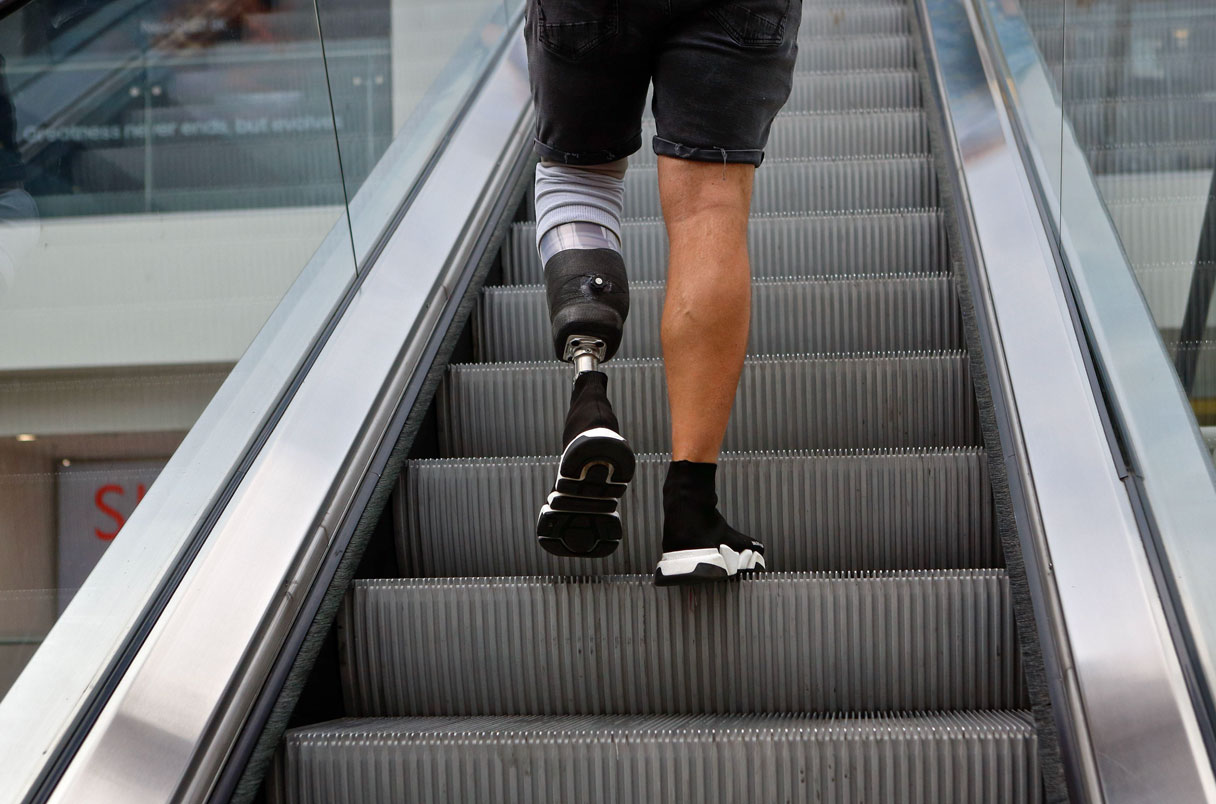
Have you talked yourself out of a trip because the airport part seemed like more trouble than the destination was worth? Plenty of prosthesis wearers have, usually based on an assumption about security screening that turns out to be wrong. Air travel with a prosthesis is genuinely manageable, and the parts that cause problems are mostly predictable — which means they’re mostly preventable. Screening has established procedures, airlines have handled this for decades, and the discomfort of a long flight responds to the same strategies that work anywhere else you sit too long. A little preparation is the difference between an unpleasant travel day and an unremarkable one.
Getting Through Airport Screening Without Stress
The single most useful thing to know: you aren’t required to remove your prosthesis to be screened.
TSA procedures accommodate prosthetic devices. You can go through screening wearing your prosthesis, and you’re entitled to be screened without removing it. That’s the standing procedure, not a favor.
Tell the officer at the start. A simple sentence — “I have a prosthetic leg” — before you enter the machine sets the process up correctly. If you’d rather not announce it aloud, TSA’s notification card can be handed over discreetly.
Expect additional screening. Prosthetic components frequently trigger equipment, and that’s normal rather than suspicious. Screening may include a pat-down of the area, a visual inspection, and swabbing of your hands or the device for explosive trace detection. If you’re wearing shorts or the device is visible, some of this goes faster.
You can request a private screening area at any point, and you can ask for a companion to accompany you. You can also ask that the officer change gloves.
You aren’t required to stand unsupported for extended periods, and you can ask for a chair. Say what you need.
TSA operates a helpline for travelers with disabilities and medical conditions that can arrange assistance in advance of your flight — worth using if you’re anxious or traveling internationally, where procedures vary by country.
Give yourself extra time. Ninety minutes of margin removes most of the pressure that makes screening feel worse than it is.
Packing Liners, Socks, and Tools for a Trip
Pack as though a bag might not arrive, because sometimes one doesn’t.
Everything essential goes in your carry-on. Liners, prosthetic socks across every ply you use, sheaths, any sleeve, valve, or lock your suspension depends on, and the small tool your prosthetist gave you for adjustments. If you use a battery-powered component, the charger travels with you, not in checked luggage.
Bring more socks than you’d use at home. Travel days involve heat, long periods of sitting, and irregular schedules, all of which move limb volume around more than a normal day would.
Pack skin care: mild soap, wipes, a towel, and whatever product you normally use. Hotel soap isn’t always kind to residual limb skin.
Carry documentation. A letter from your prosthetist or physician identifying your device is occasionally useful, particularly internationally. Bring your prosthetist’s contact information and photographs of your device including any labels or serial numbers.
Think about power abroad. Chargers may need a plug adapter, and voltage differs by country.
Consider a spare device if you own one. For a long trip or somewhere remote, an older prosthesis is worth the suitcase space.
Pack a small bag within your bag. Keeping prosthetic supplies together in one pouch rather than scattered through a suitcase means you can find a sock in a dark hotel room without unpacking everything.
And check your destination before you leave. Knowing there’s a prosthetics clinic within reach of where you’re staying costs nothing to look up and is invaluable if something breaks.
Managing Swelling and Stiffness on Long Journeys
Sitting still for hours affects everyone. It affects a residual limb more.
Fluid pools when you’re immobile, and limb volume shifts as a result. Many wearers find their socket feels different by the end of a long flight — sometimes tighter, sometimes looser, occasionally both across a single journey. Bring socks and adjust rather than tolerating it.
Move on a schedule. Stand or walk the aisle every hour or two if you’re able and it’s permitted. If you can’t get up, move what you can: ankle pumps on the sound side, gentle muscle contractions in the residual limb, position changes.
Ask for an appropriate seat. An aisle seat makes moving realistic. A bulkhead or extra-legroom seat gives you room to shift position. Airlines can note requirements when you book, and many will assist.
Hydrate, and go easier on alcohol and caffeine than you might on the ground.
Doffing during a long flight is a personal call. Some wearers do it for comfort; others prefer to keep the device on for ease of getting to a lavatory. If you do doff, keep the prosthesis secure and where you can reach it.
Compression on the sound-side leg is worth discussing with your physician before a long haul, particularly if you have circulation concerns.
Long car and train journeys deserve the same treatment. The mechanism is identical, and a road trip through Florida can sit you down for just as long as a flight.
And build in recovery on arrival. Check your skin thoroughly when you land, and don’t schedule a demanding first day.
FAQ
Do I have to remove my prosthesis at airport security?
No. TSA procedures allow you to be screened while wearing a prosthetic device, and you shouldn’t be asked to remove it in order to pass through. You should expect additional screening — typically a pat-down of the area, a visual inspection, and swabbing for explosive trace detection — because prosthetic components often trigger the equipment. Tell the officer before you enter the checkpoint, and know that you can request a private screening area, a chair, fresh gloves, and a companion at any point.
Should my prosthesis travel as carry-on or checked baggage?
Wear it if you can — that’s simplest, and it keeps the device with you. If you’re bringing a spare device, keep it as carry-on rather than checked whenever possible. Checked luggage gets lost, delayed, and roughly handled, and a prosthesis is not something you want separated from you in an unfamiliar city. All liners, socks, tools, and chargers should be in your carry-on for the same reason, regardless of where the device itself travels.
What should I do if my device is damaged while I’m away from home?
Assess whether it’s safe to keep using. If a socket is cracked, suspension has failed, or something structural has given way, stop walking on it rather than risking a fall. Call your home prosthetist first — they know your device and can advise, and they may be able to coordinate with a clinic where you are. Then search for a local prosthetics clinic and explain you’re a traveler with a damaged device. Photograph the damage before any repair for insurance purposes.
Seeing More of the World With Less Worry
Travel days are logistics, and logistics respond to preparation. Wear the device through security, know that you don’t have to take it off, keep everything essential in the bag that stays with you, and move on long flights. That’s most of it. The wearers who travel comfortably aren’t the ones with simpler devices — they’re the ones who did this once, found it manageable, and stopped dreading it. OPC Prosthetic Centers helps patients across Florida, North Carolina, and South Carolina get their devices trip-ready, and a pre-travel checkup is a short appointment worth making.